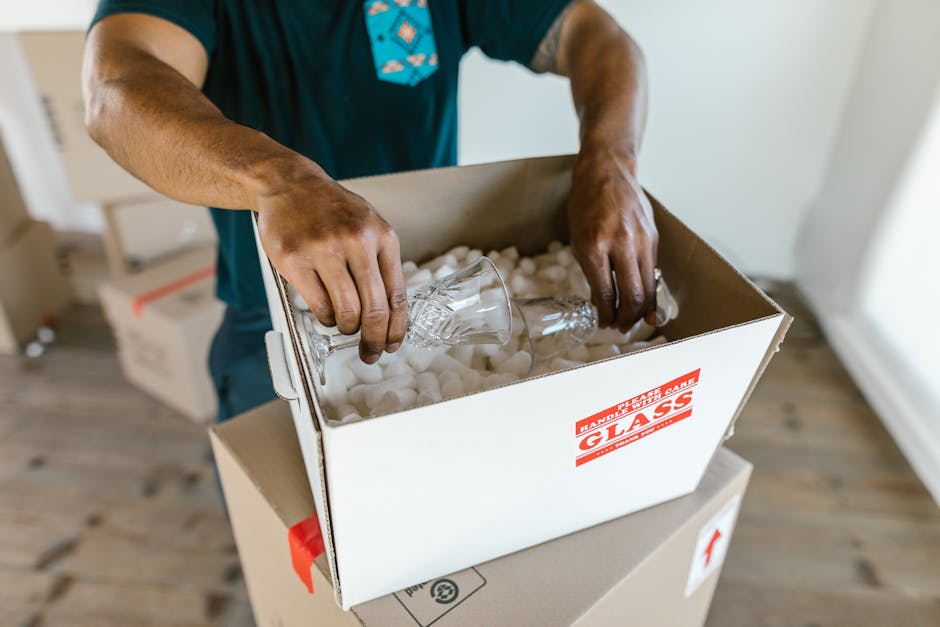
Secure Loading Techniques Pros Use to Protect Fragile Items
Fragile items have a habit of reminding you how quickly a move can go wrong. One bump, one poorly tied box, one awkward corner on a wet morning, and suddenly a mirror, lamp, or glass shelf is in pieces. That is why secure loading techniques pros use to protect fragile items are such a big deal. They are not just about being careful. They are about creating a loading plan that controls movement, absorbs shock, and keeps weight where it should be.
Whether you are moving a few delicate boxes, an entire household, or a mix of office equipment and breakables, the goal is the same: arrive with everything intact. In this guide, you will learn how professionals think about fragile loads, what separates a decent move from a stressful one, and how to spot the loading methods that genuinely reduce risk. We'll also cover practical checklists, common mistakes, and the support services that can make the whole job easier.
Table of Contents
- Why Secure Loading Techniques Pros Use to Protect Fragile Items Matters
- How Secure Loading Techniques Pros Use to Protect Fragile Items Works
- Key Benefits and Practical Advantages
- Who This Is For and When It Makes Sense
- Step-by-Step Guidance
- Expert Tips for Better Results
- Common Mistakes to Avoid
- Tools, Resources and Recommendations
- Law, Compliance, Standards, or Best Practice
- Options, Methods, or Comparison Table
- Case Study or Real-World Example
- Practical Checklist
- Conclusion
- Frequently Asked Questions
Why Secure Loading Techniques Pros Use to Protect Fragile Items Matters
Fragile goods fail for predictable reasons. They move inside boxes, boxes slide inside vans, and items with weak points crack under pressure or vibration. A vase does not need much drama to break; a little sideways shift during a turn can be enough. A framed print might survive the packing stage and still get bent when it is loaded flat on top of a heavier item. Truth be told, the loading stage is where a lot of avoidable damage happens.
Professional loading is about more than lifting carefully. It is about how the vehicle is arranged, how the weight is distributed, and how well the items are isolated from each other. That matters for home moves, office relocations, and even smaller jobs such as a man and van service or furniture pick-up where delicate pieces still need proper handling.
It also matters because fragile items are often the most emotionally loaded things in a move. Family glassware, a child's keepsake, a monitor with a custom setup, an antique chair from your nan's house... those pieces are hard to replace, and sometimes impossible. Secure loading protects more than the object itself. It protects time, money, and a bit of peace of mind too.
For businesses, the stakes can be even higher. A broken display unit, IT hardware, or specialist stock can delay reopening, trigger replacement costs, and create a lot of awkward phone calls. That is one reason many teams look for structured support such as commercial moves or office relocation services when the load includes fragile equipment or mixed-value items.
How Secure Loading Techniques Pros Use to Protect Fragile Items Works
At a practical level, secure loading works by controlling three things: movement, pressure, and impact. If you reduce those three, you reduce damage. That sounds simple, but the detail is where the real skill sits.
Professionals usually start by separating fragile items into groups based on shape, weight, and breakability. Glassware is not treated the same way as a flat-screen TV. A ceramic lamp base is not packed like a box of mugs. Once grouped, items are packed so that no single item is taking a weird load from another item. This is a small point, but it changes everything.
Then comes the loading pattern. Pros load heavier, stable items first and use them to create a solid base. Fragile boxes are kept off the floor where possible, away from door edges, and away from loose movement zones. In a moving truck or removal van, the idea is to build a kind of stable puzzle: tight enough that nothing shifts, but not so crushed that boxes are damaged by pressure.
There is also the matter of friction and restraint. Blankets, straps, non-slip mats, corner protectors, and dunnage all help. Dunnage is just a tidy word for fill material or cushioning used to stop items shifting. It may sound technical, but in real life it often means a folded blanket placed exactly where a wobble would happen. Nothing flashy. Just effective.
In our experience, the best loads feel almost boring when the doors close. No rattling. No visible gaps. No panicked repacking at the last minute. That quiet, steady finish is usually the sign that the secure loading process was done properly.
Key Benefits and Practical Advantages
The biggest benefit is obvious: fewer damaged items. But the practical advantages go a bit further than that.
- Less movement in transit: A well-packed load stays put during braking, turning, and uneven road surfaces.
- Better use of space: Good loading is not random. It uses the vehicle efficiently without creating crush points.
- Faster unloading: If fragile items are loaded in a sensible order, they can be unloaded without a tangle of heavy boxes on top.
- Lower stress for everyone: People relax when they see a methodical load. And to be fair, that calm spreads quickly.
- Reduced insurance headaches: Damage claims are less likely when goods are packed and loaded with care and documented sensibly.
There is also a subtle but important benefit: better handling of mixed loads. A move is rarely all one thing. You may have books, glassware, picture frames, a washing machine, a dining table, and a box of cables that looks harmless until it turns into a knot. Secure loading techniques help pros keep fragile items separate from heavy, awkward, or oily items that can cause damage.
For homes, this often means using support from a home moves team or experienced house removalists. For bulkier transport jobs, a suitable moving truck or even removal truck hire can make the difference between a tidy trip and a nerve-wracking one.
Who This Is For and When It Makes Sense
This topic matters if you are moving anything that can crack, chip, shatter, bend, or lose alignment. That includes obvious things like glassware and mirrors, but also less obvious items such as printers, monitors, artwork, ceramics, audio gear, framed photos, chandeliers, antique furniture, and certain office electronics.
It makes sense for:
- Homeowners moving between properties
- Renters with a small but delicate load
- Families with sentimental pieces and heirlooms
- Offices relocating specialist equipment
- Retailers moving stock, displays, or fittings
- People using a smaller transport option, such as a man with van service, where space is tighter and organisation matters more
It also makes sense when the move is not especially big, but the items themselves are precious. A single fragile sideboard can demand more attention than ten ordinary boxes. That is a little annoying, admittedly, but it is the reality of it.
If you are unsure whether your move needs a more structured approach, think about what would happen if one item shifted by a few inches during the journey. If the answer is "that would be bad," then secure loading is worth prioritising.
Step-by-Step Guidance
Here is the practical sequence pros tend to follow. You do not need to be overly technical, but the order matters.
1. Sort fragile items before moving day
Start by separating fragile items from general household goods. Group by type: glass, ceramics, framed art, electronics, antiques, and long awkward pieces. This helps you plan packing materials and decide what needs extra protection.
2. Use the right packing materials
Strong boxes, paper wrap, bubble wrap, packing paper, blankets, and tape all matter. Choose double-walled boxes for heavier breakables where possible. Do not overfill. A box that bulges is a box waiting to fail, usually at the worst possible moment.
3. Cushion each item individually
Individual wrapping prevents items knocking together inside the box. Plates should stand vertically with separation. Glasses should be cushioned so rims and stems are protected. Delicate electronics should be packed with enough padding to stop hard contact, but not so much loose fill that the item floats about.
4. Label clearly and honestly
Mark boxes as fragile, but also note what is inside and which way up they should go. "Fragile" alone is too vague. A better label might read: "Glass kitchenware - this side up - do not stack." Simple, direct, no guessing.
5. Load a stable base first
Place the heaviest and least delicate items on the floor of the vehicle first. Build a level, stable base. Keep the centre of gravity low where possible. This stops the load feeling top-heavy and less likely to shift.
6. Position fragile items away from crush zones
Fragile boxes should not sit underneath heavy furniture, loose tools, or anything that can move and press down on them. Keep them above the heaviest items only if the base is stable and there is no risk of compression. Otherwise, set them in protected side spaces.
7. Fill gaps so nothing can slide
Any open space invites movement. Use blankets, cushions, or other suitable fillers to stop sideways drift. A quiet load is a good load. If you can hear things shifting while you stand inside the vehicle, that is a warning sign.
8. Secure with straps or tiedown points
Use proper anchoring points rather than hoping friction will do the job. Straps should be snug, not crushing. The aim is to restrain movement without distorting the item. This is especially important for tall items, display pieces, and boxed electronics.
9. Double-check before departure
Before doors close, look for gaps, leaning stacks, sharp edges near delicate surfaces, and anything that could slide. A two-minute check saves far more time than dealing with a broken item later. Ask yourself: if we hit a speed bump, what moves first?
10. Unload in reverse order
Safe loading is only half the job. Unload fragile items early, carefully, and with clean handling routes. Keep them away from wet paths, door congestion, and clutter on arrival. The first ten minutes on site can be a bit chaotic, so a calm plan helps.
Expert Tips for Better Results
Here are the little things pros tend to do that make the biggest difference.
- Use consistent box sizes where possible: It makes stacking safer and more predictable.
- Keep fragile loads separate from oily or dirty items: A clean load is easier to control, and it avoids staining or residue damage.
- Protect corners first: Corners and edges fail more easily than broad flat surfaces.
- Do not over-rely on "fragile" labels: They help, but they are not a substitute for good loading practice.
- Think about the route as well as the load: Narrow stairs, uneven driveways, and tight London streets can affect how items are brought out and loaded. Sometimes the biggest risk is the doorway, not the van.
- Use packing and loading as one process: If the packing is poor, loading cannot fully fix it. Pros often combine both with packing and unpacking services so the system is consistent from start to finish.
A small but useful habit: take a quick photo of the finished load before the vehicle leaves. It is not glamorous, but it helps with accountability and gives you a visual reference if you need one later. Not a bad idea at all.
Common Mistakes to Avoid
Most damage is not caused by one dramatic error. It is usually a chain of small ones. Here are the most common trouble spots.
- Mixing fragile and heavy items: A box of books can crush soft or delicate packaging surprisingly fast.
- Leaving empty spaces in boxes: Internal movement breaks things from the inside out.
- Stacking too high: High stacks wobble more and create more pressure on lower boxes.
- Using weak tape or worn boxes: The box is part of the protection system. If it fails, everything else is compromised.
- Ignoring vehicle movement: What seems stable on a still driveway may not survive a sudden stop.
- Putting sentimental items in a rush box: Everyone has one. It's the box you say you'll sort later, and then later turns messy.
Another mistake is assuming that a small move means the loading can be casual. It rarely works that way. Even short journeys can involve braking, kerb edges, or one awkward bend. If the item is fragile, the distance does not cancel the risk.
Tools, Resources and Recommendations
The right tools do not need to be fancy, but they should be suitable for the item and the trip.
| Tool or Material | Best Use | Why It Helps |
|---|---|---|
| Double-walled boxes | Heavier fragile items | Offers stronger protection against crush damage |
| Packing paper | Glass, ceramics, void filling | Reduces movement without adding hard pressure |
| Bubble wrap | Breakables with delicate surfaces | Cushions impact and edge contact |
| Removal blankets | Furniture, mirrors, large framed items | Protects surfaces and helps with spacing in the vehicle |
| Ratchet straps or load straps | Securing larger items | Prevents shifting during travel |
| Non-slip mats | Vehicle floor protection | Reduces sliding on smooth surfaces |
If you are comparing service options, it can help to think about the type of vehicle and support you need. A smaller move may suit a quick man and van arrangement, while larger or more structured jobs may justify a dedicated moving truck or broader removal truck hire. If your fragile items are part of a bigger move, it may also be worth reviewing pricing and quotes early so you know what level of support fits the job.
And if you are simply replacing a few old items, a small collection service such as furniture pick-up can be a clean, practical option.
Law, Compliance, Standards, or Best Practice
For most readers, the main concern is not a legal technicality; it is doing the job safely and responsibly. In the UK, moving and transport work should be approached with sensible risk awareness, safe lifting practice, and suitable vehicle restraint methods. Professional operators are also expected to think carefully about insurance, liability, and safe handling procedures.
If you are hiring help, ask whether the company has a clear approach to insurance and safety, and whether they can explain how fragile items are handled during loading and transit. A reputable provider should be able to discuss the process in plain English. If the explanation sounds vague, that is worth noticing.
Best practice also means understanding the limits of protection. No loading technique can make a badly packed load indestructible. It can only reduce risk. That is why a careful combination of packing, positioning, restraint, and route planning matters so much.
For trust and transparency, it is sensible to review policies such as health and safety policy, insurance and safety, and if you are checking how a service handles your information, the relevant privacy policy and terms and conditions. That is not just box-ticking. It helps you understand expectations before moving day arrives.
Options, Methods, or Comparison Table
Different fragile loads call for different handling methods. Here is a simple comparison to help you choose the right approach.
| Method | Best For | Strengths | Limitations |
|---|---|---|---|
| Boxed-and-cushioned loading | Household breakables, decor, small electronics | Flexible, widely used, good for mixed loads | Depends heavily on packing quality |
| Blanket-wrapped furniture loading | Mirrors, framed art, polished furniture | Protects surfaces and edges well | Needs careful strapping to stay secure |
| Crated or reinforced loading | High-value, very delicate, or unusual items | Strong structural protection | More time, more cost, less flexible |
| Dedicated compartment loading | Office equipment, mixed-value business loads | Reduces interference from other items | Requires suitable vehicle layout |
For many people, the best option is not the most expensive one. It is the one that matches the item's vulnerability and the journey's risk. A straightforward home move may only need careful boxed loading. A business relocation with monitors, printers, and display units might need a more layered approach through commercial moves or office relocation services. Different job, different answer. Simple as that.
Case Study or Real-World Example
Here is a realistic example based on a common type of move. A family relocating from a flat in southwest London had a mixture of items: three boxes of kitchen glassware, two framed prints, a standing lamp, a small mirror, and an old but cherished side table. Nothing enormous. But every piece had a weak point.
The loading plan started with the side table and a few sturdier boxes to form a stable base in the van. The mirror and framed prints were wrapped, then placed upright between blanket-padded gaps so they could not slide. The lamp was boxed separately with cushioning around the base and shade. The glassware boxes were loaded last, but only after the heavier items had locked the lower row in place.
What made this work was not just the wrapping. It was the sequence. The driver checked for empty pockets, added a folded blanket to stop a lateral shift, and avoided stacking anything with a hard edge near the framed items. On arrival, the boxes came out in the same order they had gone in, which saved time and avoided the classic scramble at the front door.
The move was uneventful. Which, honestly, is exactly what you want. No drama, no clattering, no last-minute "hang on a second". Just a clean handover and a few relieved smiles.
Practical Checklist
Use this checklist before the vehicle leaves. It keeps things grounded when the day starts moving fast.
- Fragile items sorted by type and priority
- Boxes sturdy, clean, and correctly sized
- Each delicate item individually cushioned
- Empty space inside boxes filled
- Boxes clearly labelled with contents and orientation
- Heavy items loaded first to create a stable base
- Fragile boxes kept away from crush zones
- Gaps filled with blankets or suitable cushioning
- Straps or tiedowns used where needed
- No loose tools or sharp items near breakables
- Final load check completed before departure
- Fragile items scheduled for careful unloading at destination
Expert summary: if the box can move, the item inside can be damaged; if the item can shift, the load needs more restraint. That is the whole game, really.
Conclusion
Secure loading is not about overthinking every box. It is about using a sensible system that keeps fragile items still, separated, cushioned, and supported from the moment they leave your home or business until they reach the other side. The pros do it through planning, not luck.
If you take one thing away, let it be this: good fragile-item protection is created in stages. Packing, loading, restraint, and unloading all matter. Skip one, and the chain weakens. Do them properly, and even a busy move can feel calm and controlled.
And if you want help with a move that includes delicate items, it is worth choosing a team that understands the difference between "careful" and actually secure. That difference matters more than most people think, especially on a cold London morning when the van door opens and the job has to be right.
Get a free quote today and see how much you can save.
If you are ready to plan the next step, take a look at about us or contact us to speak with a team that understands the realities of careful moving. A smooth move is a quiet kind of win, and frankly, that is a lovely thing.
Frequently Asked Questions
What are secure loading techniques for fragile items?
They are the methods professionals use to keep delicate items from moving, being crushed, or knocking into other goods during transport. That includes careful packing, stable stacking, gap filling, and proper strapping.
How do removal pros protect fragile items in a van?
They usually use a combination of cushioning, upright placement where appropriate, heavy-item base loading, and restraint points to stop movement. The key is to prevent the load from shifting when the vehicle brakes or turns.
Should fragile boxes always go on top?
Not always. They should go where they are safest. Sometimes that is on top of a stable load, but only if the lower items can support them without crushing. Other times they are better placed in a protected side section.
What is the safest way to pack glass items for moving?
Wrap each item individually, use sturdy boxes, fill all voids, and keep the contents from touching each other. Plates are often safest when packed vertically rather than flat.
Do I need special equipment for fragile furniture?
Often yes. Blankets, corner protectors, straps, and non-slip mats can make a big difference. For larger items like mirrors or polished furniture, extra surface protection is usually worth it.
Is it better to use a man and van or a larger removal truck for fragile items?
It depends on the size and quantity of the load. A smaller van can work well for a few delicate items if they are packed and secured properly. A larger truck may be better for mixed or bulky loads because it allows more separation and space.
How do I stop fragile items from sliding around inside boxes?
Use cushioning material to fill every gap so the contents cannot shift. If the item still moves when the box is gently tilted, it needs more packing support.
Can professional packing services reduce damage risk?
Yes, because they help make the packing and loading process more consistent. A service like packing and unpacking services can be especially useful when you have a lot of fragile items or limited time.
What should I ask a mover before booking fragile-item transport?
Ask how fragile items are packed, how they are loaded, whether the vehicle has tie-down points, and whether the team carries insurance and follows clear safety procedures. Straight answers are a good sign.
Are fragile items covered if they are damaged in transit?
Coverage depends on the provider, the terms of service, and how the items were packed and handled. It is best to check the company's insurance and safety details before booking so you know where you stand.
What is the biggest mistake people make with fragile loads?
The biggest mistake is assuming that a box being labelled fragile is enough. It is not. Proper packing, sensible vehicle placement, and movement control are what actually protect the item.
When should I book help for a fragile-heavy move?
As early as possible if the move includes glass, artwork, antiques, electronics, or awkward furniture. That gives time to plan the load, choose the right vehicle, and avoid a rushed last-minute setup.
Can I use the same loading approach for office and home moves?
The principles are the same, but office loads often include equipment that needs extra separation and careful cabling management. A home move may involve more sentimental or irregular items. The method changes a bit, the mindset stays careful.
Is there a sustainability angle to secure loading?
Yes. Better loading reduces breakage, which means fewer replacements, less waste, and fewer damaged items going straight to disposal. If that matters to you, it is worth reviewing a provider's recycling and sustainability approach too.